.webp)
Humanitarian demining is a comprehensive process aimed at returning land to safe use. Operations do not begin directly with the search for or disposal of explosive ordnance. Before clearance starts, specialists collect and analyse information, survey the area, determine the nature and boundaries of potential contamination, and plan further activities.
Each stage forms part of a single process designed to make land clearance systematic, safe and effective.
Non-Technical Survey
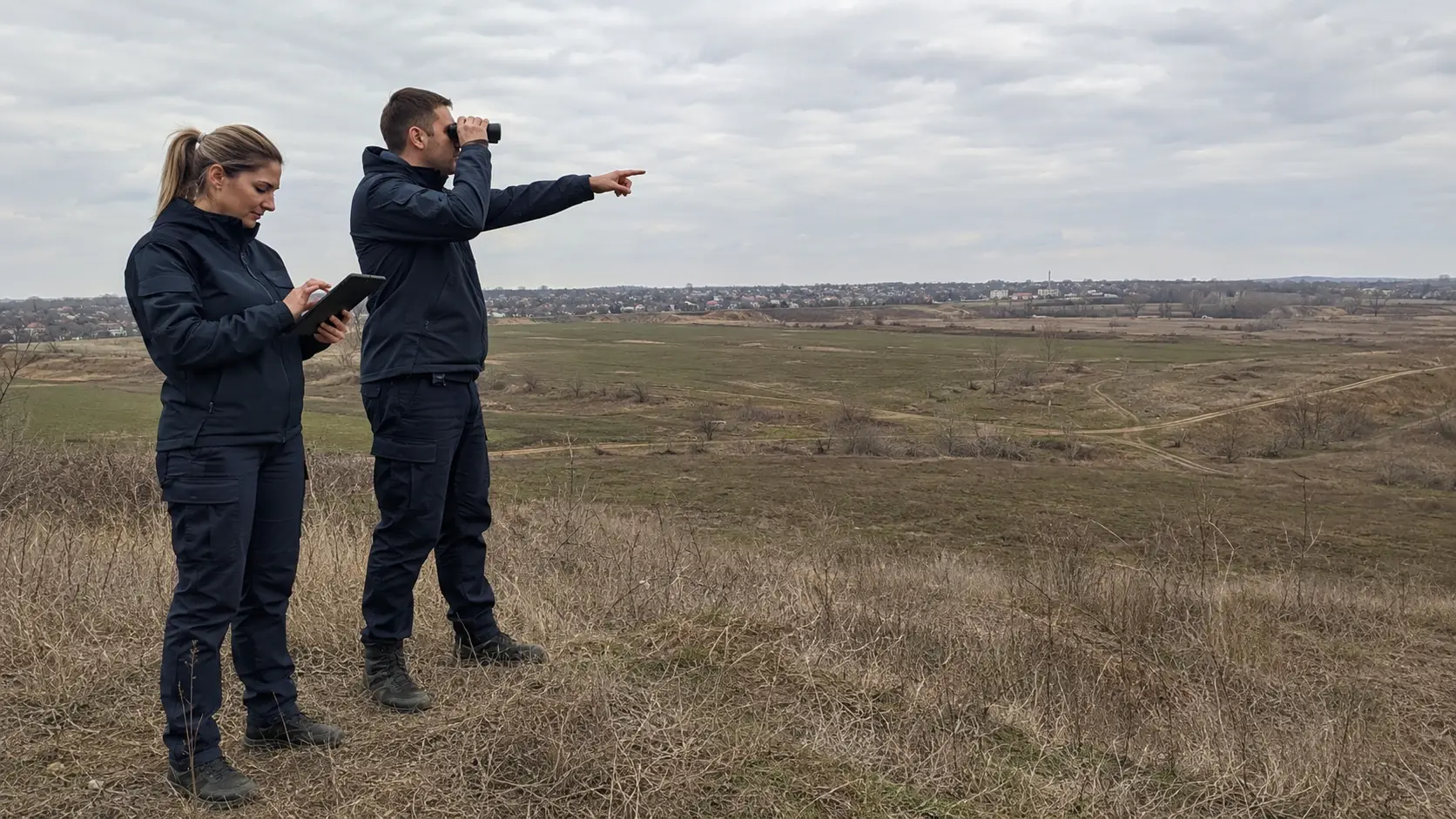
A non-technical survey is one of the first stages when working with an area where explosive contamination is suspected or has been reported.
Specialists collect and analyse available information, review the history of the area, and assess available data concerning hostilities and other potential sources of explosive hazards.
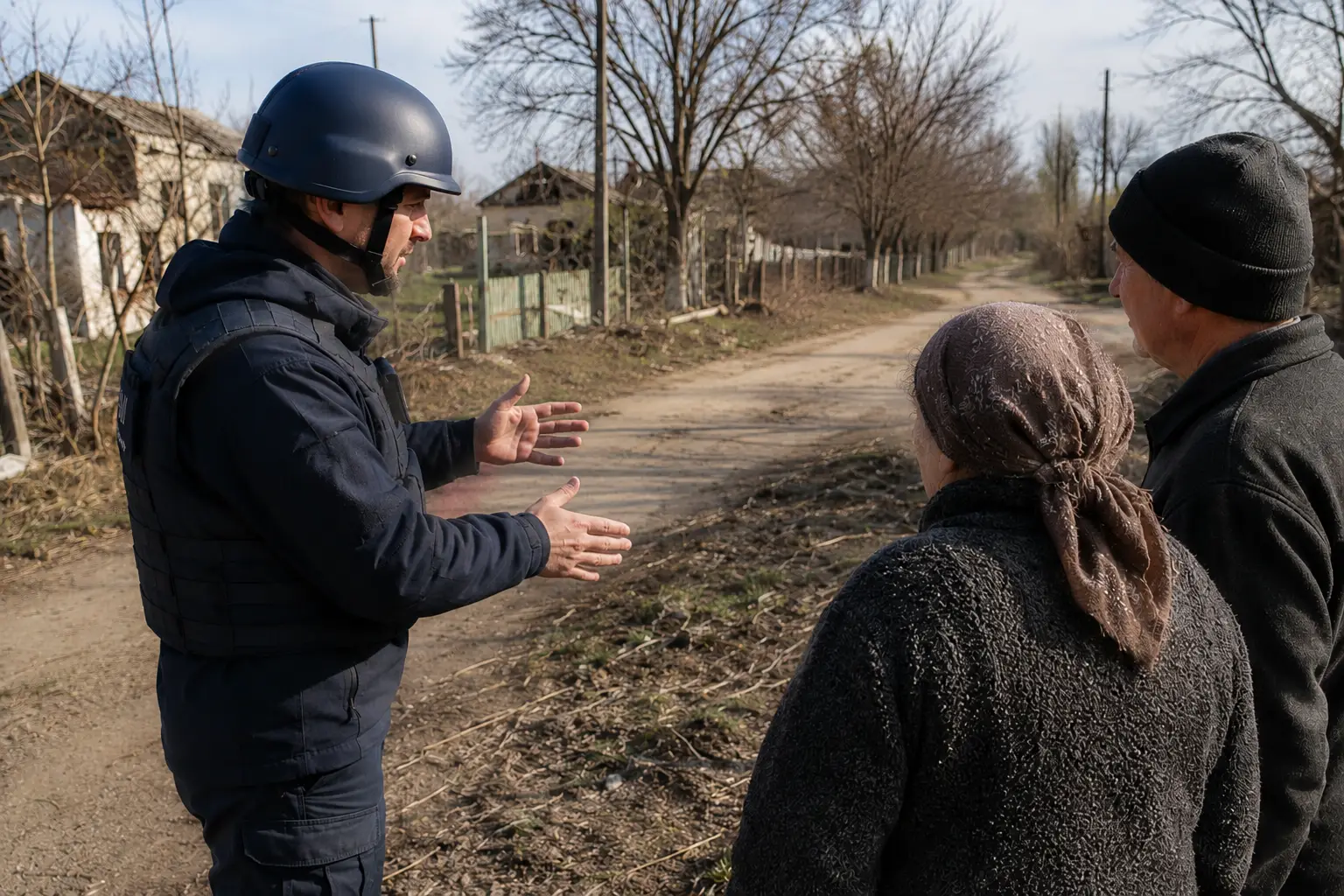
During field activities, the area may be visually assessed from safe locations, while coordinates and other information required for further planning are recorded.
The results of a non-technical survey help determine which areas require further investigation.
Technical Survey
When direct investigation is required to obtain more detailed information about an area, a technical survey is conducted.
At this stage, appropriate methods and equipment are used to obtain confirmed information about the presence, nature and boundaries of contamination.
The findings are then used to determine the scope of further operations and to plan subsequent clearance activities.
Manual Demining
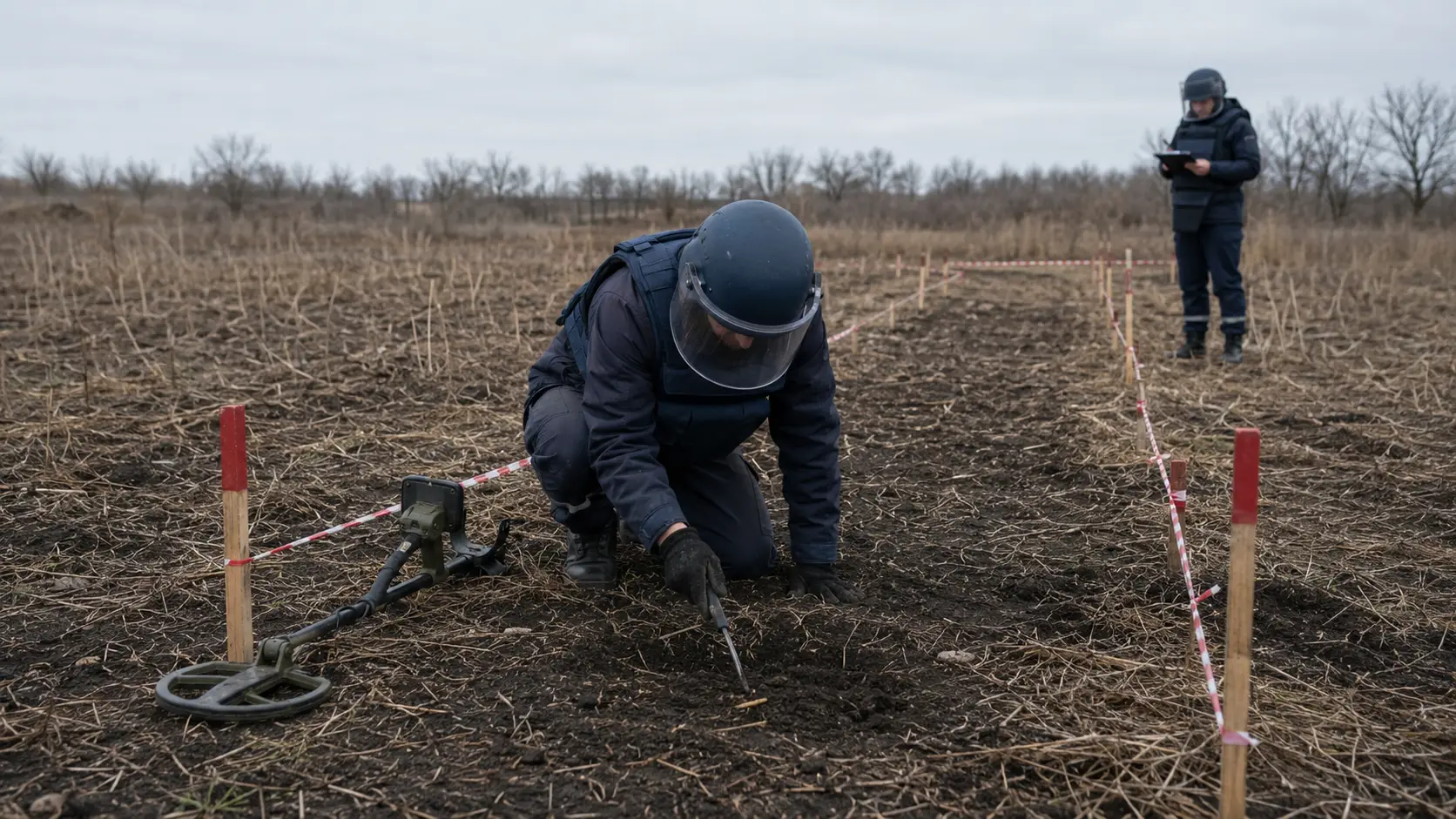
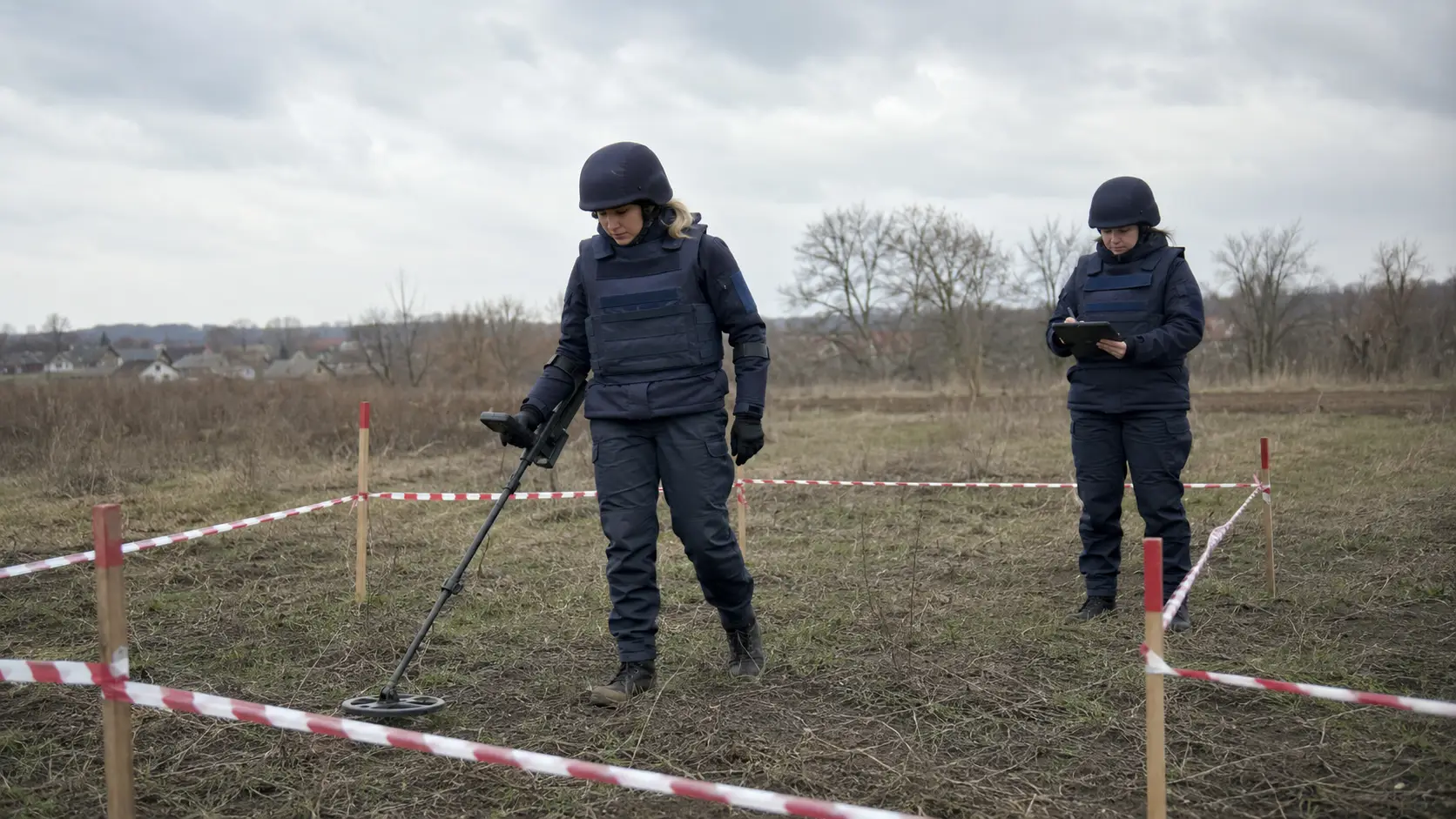
Manual demining involves specially trained deminers working with appropriate equipment and hand tools.
Operations are carried out within organised and clearly marked working areas. Deminers systematically investigate the ground while following established procedures and safety requirements.
This method allows detailed work in areas where direct control by trained personnel is required.
Mechanised Demining
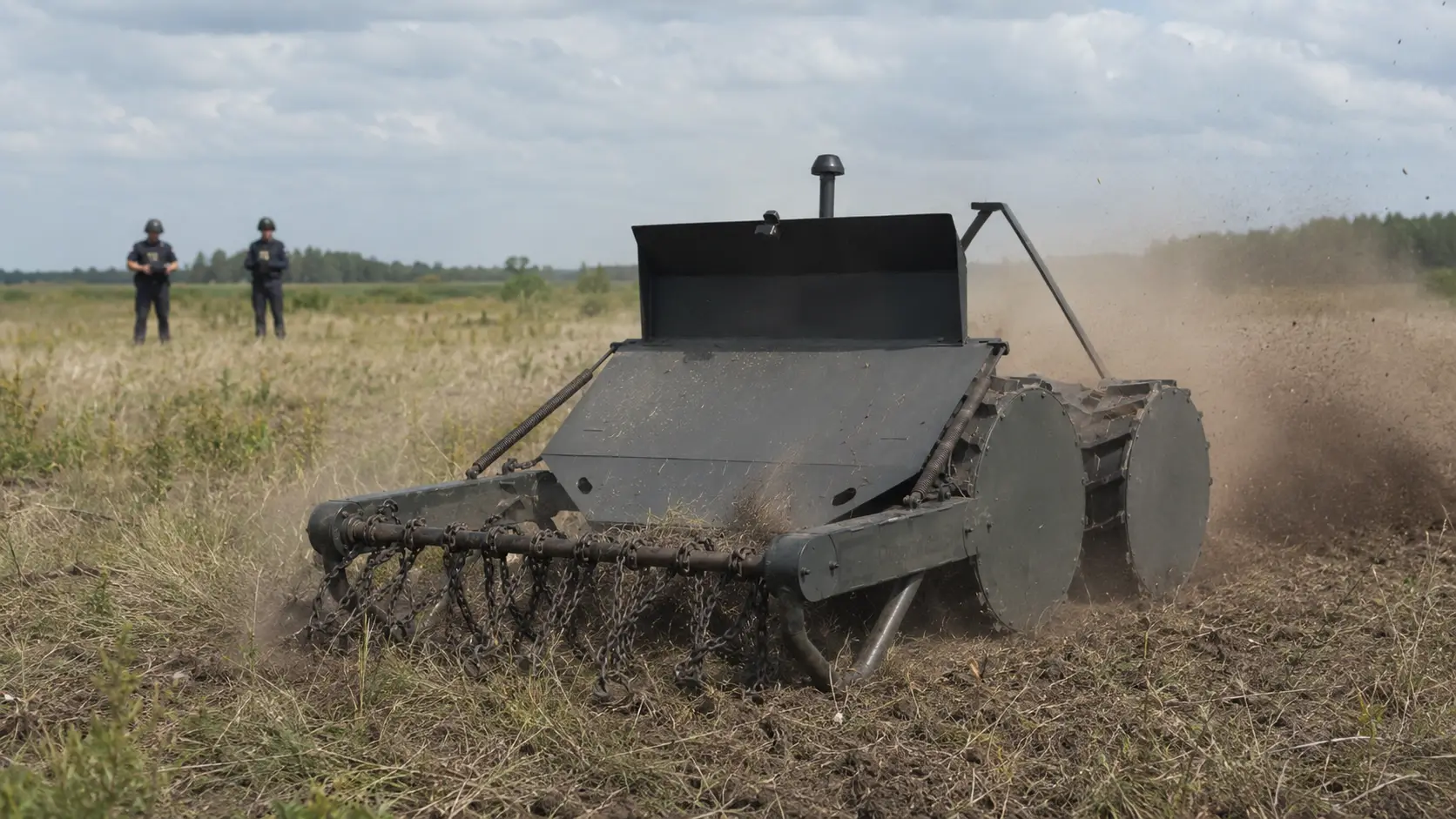
Specialised demining machines and mechanical systems may be used for certain clearance tasks.
The equipment is selected and operated according to the characteristics of the area, operational requirements and approved working procedures.
Mechanical assets can complement other clearance methods and prepare land for subsequent operations.
Battle Area Clearance
Areas affected by armed conflict may contain ammunition and other explosive remnants of war.
During battle area clearance, specialists systematically search for such items, identify and mark them, and take further action in accordance with established procedures.
The purpose of these activities is to remove explosive hazards and create conditions for the safe future use of the land.
Explosive Ordnance Disposal
Explosive items discovered during operations require separate assessment and appropriate disposal or destruction procedures.
These operations are carried out by trained specialists while maintaining the necessary safety measures and control of the surrounding area.
Documentation of Results
Completing field operations is only one part of the overall process.
The results of completed activities are recorded and documented. This helps maintain reliable information about the work performed, cleared areas and methods used.
Returning Safe Land to People
Humanitarian demining combines the work of trained personnel, specialised equipment, technology and quality management systems.
The consistent implementation of all required stages helps gradually return contaminated land to safe use by communities, businesses and landowners.
For PSM Ukraine Group, this remains the central purpose of our work — returning safe land to people.
Photo Gallery